
fficiently crush river pebbles at 150–200 TPH for Surabaya coastal road projects with AIMIX crusher plants. Reliable, high-capacity solutions.

Building coastal roads in Surabaya requires high-quality aggregates and reliable crushing solutions. River pebbles are a key material for concrete and asphalt, but processing them efficiently is always a challenge. Contractors face issues such as low production capacity, uneven particle size, and frequent equipment downtime. In this article, we explore practical crusher pemecah batu solutions to achieve 150–200 tons per hour (TPH) river pebble crushing, helping contractors save time, reduce costs, and improve construction quality.

Before diving into solutions, it is important to understand why river pebble crushing is critical. Coastal road projects require aggregates with consistent size, shape, and strength. River pebbles are naturally hard and smooth, making them ideal for concrete foundations and asphalt layers. However, their rounded shape often leads to slipping in construction machinery and uneven compaction. Therefore, crushing them to the right specifications ensures better adhesion, stability, and longevity of the road.
Moreover, the project timeline in Surabaya is tight, with multiple road sections under simultaneous construction. Contractors cannot afford delays caused by inefficient crushing processes. Achieving 150–200 TPH ensures that the material supply matches the construction demand, reducing idle time and enhancing workflow efficiency.
Not all mesin penghancur are suitable for river pebble processing. Contractors should focus on equipment that offers high throughput, low wear, and easy maintenance. Jaw crushers are excellent for primary crushing, breaking large pebbles into manageable sizes. Afterward, cone crushers or impact crushers can refine the material to meet the desired aggregate specifications.
Besides crusher types, attention should be paid to the feeding system, screening equipment, and conveyor layout. A well-designed plant allows continuous operation, reduces manual handling, and minimizes energy consumption. For Surabaya projects, mobile or semi-mobile crusher plants are particularly advantageous because they can be moved closer to different construction sites along the coast, reducing transportation costs.
First, consider the jaw crusher. A strong, wear-resistant jaw ensures stable primary crushing. Second, the secondary crusher must provide precise particle shaping. Third, vibrating screens with multiple decks allow separation into required sizes without bottlenecks. Finally, efficient conveyors and automation systems help synchronize the process and maintain steady output.
All these components together form a crusher plant capable of producing 150–200 TPH of high-quality river pebbles. Selecting components with durability and low maintenance needs ensures minimal downtime during coastal road construction.

Even with the right plant, proper operation is crucial. Contractors should ensure consistent feed size and avoid overloading the crushers. Regular monitoring of output particle size helps adjust crusher settings promptly. Additionally, routine maintenance of wear parts such as jaw plates and rotor components reduces unexpected stoppages.
Transitioning from theory to practice, scheduling crushing operations in line with road construction phases prevents material backlog. For instance, primary crushing can start a few days before the concrete or asphalt is needed, while secondary crushing and screening continue until the material reaches the job site.
Use uniform pebble feed to avoid crusher jamming. Install automated control systems to monitor plant performance in real time. Employ experienced operators to adjust settings based on pebble hardness and moisture content. These practices enhance production efficiency and guarantee the 150–200 TPH target without compromising material quality.
Meeting Surabaya’s coastal road standards is not just about speed. Quality assurance is equally important. Crushers must produce aggregates that meet local specifications for strength, durability, and grading. Contractors should conduct regular sampling and testing to verify compliance.
Moreover, using a reliable stationary or mobile crusher plant for sale reduces the risk of producing substandard material that could lead to structural defects or costly repairs. High-quality river pebbles ensure better bonding with cement and asphalt, enhancing road longevity under heavy coastal traffic and weather conditions.
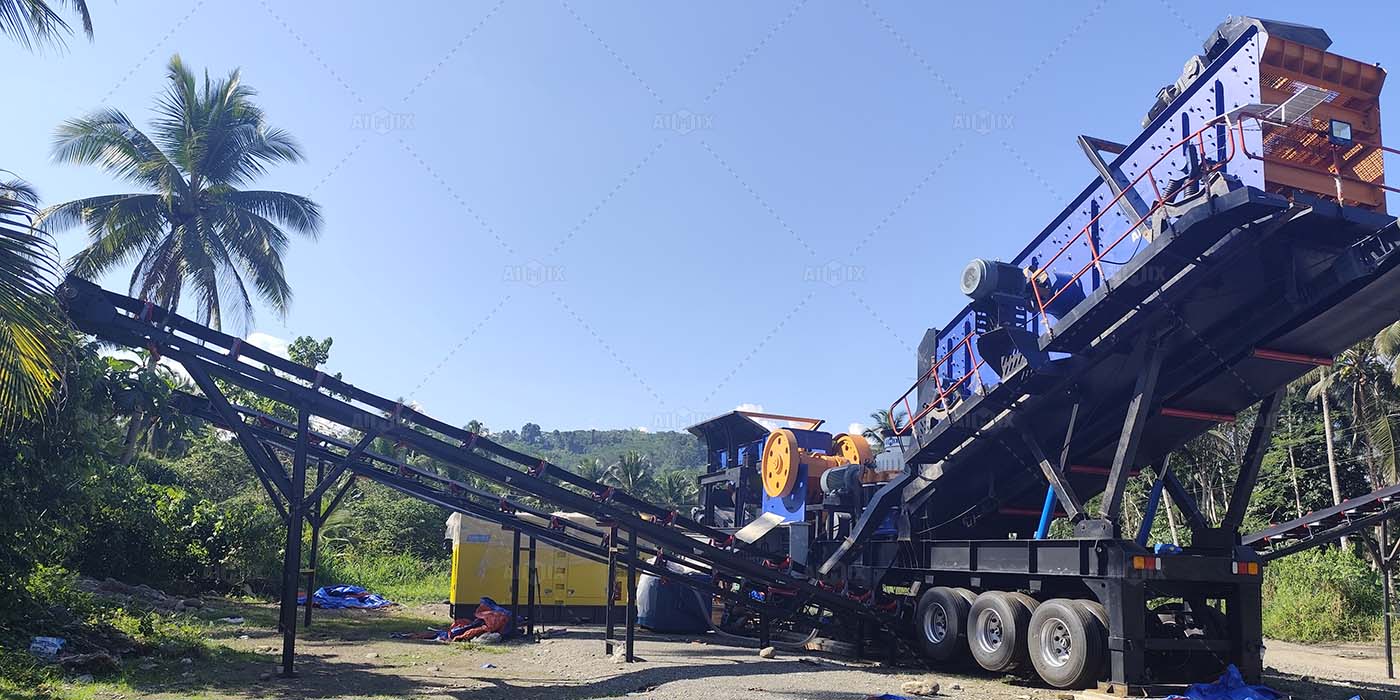
AIMIX offers a range of crusher plant solutions tailored for high-capacity river pebble processing. Their plants deliver 150–200 TPH, feature durable wear-resistant components, and provide flexible configurations suitable for Surabaya’s coastal road projects. AIMIX also offers mobile crusher plants, allowing contractors to move equipment easily across different sites.
With AIMIX, contractors benefit from energy-efficient designs, automated control systems, and responsive after-sales support. These advantages reduce operational risk, enhance productivity, and ensure continuous material supply, helping projects stay on schedule and within budget.
For Surabaya coastal road projects, achieving 150–200 TPH river pebble crushing is essential to meet construction demands. By selecting the right crusher plant, optimizing operations, and ensuring consistent quality, contractors can improve efficiency, reduce costs, and deliver superior road infrastructure.
If you want reliable, high-capacity crusher plant solutions for your coastal road projects, AIMIX provides the expertise and equipment you need. Contact AIMIX today and start your path toward efficient river pebble crushing and successful construction projects in Surabaya.